

Drip irrigation in Ukraine
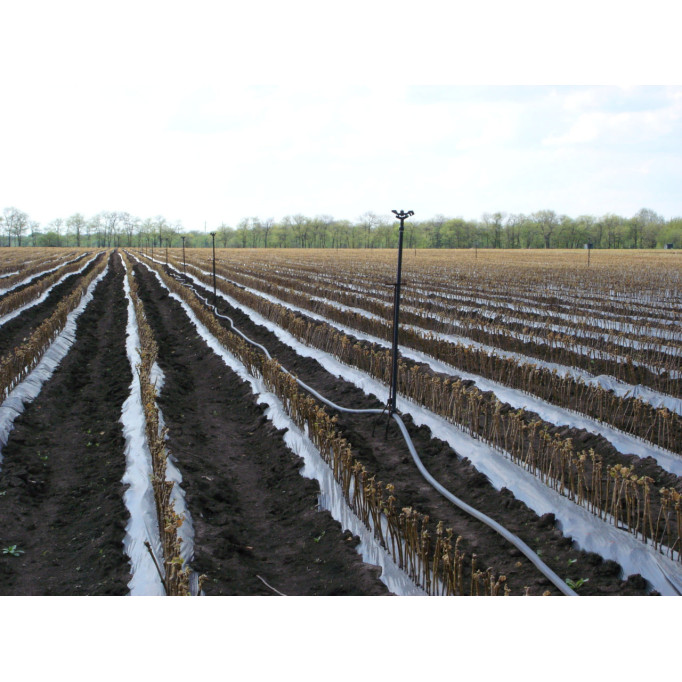
Drip irrigation in Ukraine
Drip irrigation in Ukraine is becoming more and more popular every year among farmers, greenhouse owners, gardeners and private households. The reason is simple: water becomes a resource that must be used as efficiently as possible, and stable irrigation directly affects the yield and quality of products.
Unlike traditional irrigation, the drip irrigation system delivers water to the root zone of the plant. This allows you to reduce water loss, maintain optimal soil moisture and create more stable conditions for the development of crops.
But the effectiveness of the system depends not only on the drip tape itself. It is important to choose the right water source, filtration, main pipes, fittings, pressure regulators and other components.
How to correctly design drip irrigation, what components are needed, how to choose a drip tape and what mistakes should be avoided, we will now answer these questions.
Depending on the area and culture, the system can be very simple — for a small greenhouse, or a complex automated system for a farm on tens of hectares.
The main advantage is that water is not supplied to the entire area of the field, but directly to where the plant needs it.
This is especially important for vegetable crops, berries, gardens, vineyards and greenhouse production.
Ukrainian agriculture works in conditions of unstable weather: long periods of heat can be replaced by precipitation, and the amount of available water does not always correspond to the needs of plants.
Drip irrigation can partially solve this problem.With traditional irrigation, a significant part of the water can evaporate or fall into areas where plants practically do not use it.
With drip irrigation, water is supplied directly to the root zone.
Actual savings depend on soil type, crop, weather conditions, irrigation method, and proper system setup.
A high-quality drip tape ensures an even supply of water along the irrigation line, provided that the pressure is correct and the line length is appropriate.
Plants receive water regularly, not in large volumes over long periods of time.
Water is supplied mainly in the area where the plants are located. The interrow remains relatively dry, therefore creating less favorable conditions for the development of weeds.
Through the drip irrigation system, dissolved fertilizers can be supplied directly to the root zone.
This method is called fertigation.
It allows you to control plant nutrition more accurately, but requires properly selected equipment, high-quality filtration and adherence to fertilizer application technology.
Drip irrigation is universal and can be used for various crops.
The most common directions:
vegetable crops;
tomatoes;
cucumbers;
pepper;
eggplants;
onion;
potato;
strawberry;
raspberry;
blueberry;
fruit trees;
grape;
greenhouse crops;
nurseries;
decorative plants.
How to choose a drip tape
The drip tape is one of the most important components of the system.
When choosing, you need to pay attention not only to the price per meter. Material thickness, pitch of emitters, water consumption, diameter, length of irrigation line and operating conditions are important.Thickness of drip tape: 5 mil or 6 mil
Tape thickness is often indicated in mils.
For seasonal use, thinner options, such as 5 mil, may be used.
6 mil tape has a thicker material and may be appropriate where increased mechanical strength is required.
If the tape is used for one season on a properly prepared field, there is no point in automatically overpaying for the maximum thickness.
If repeated use, transportation, assembly and disassembly, mechanical loads are important, it is advisable to consider a stronger option.
Step emitters
The pitch of the emitters is the distance between the water supply points.
For example, for vegetables planted close together, a smaller pitch can be used.
For crops with a greater distance between plants, it is advisable to consider a larger step.
An incorrectly selected step can lead to uneven soil moisture.
Therefore, before buying a drip tape, you need to know the planting scheme.
Emitter water consumption
Another important parameter is the output of the emitter, which is usually indicated in liters per hour.
For example, a drip tape with a consumption of 1 l/h per emitter and a tape with a different performance will create different water consumption of the entire system.
This must be taken into account when selecting a pump, filter, main pipe and the number of simultaneously working lines.
How to calculate the amount of drip tape
For an approximate calculation, you need to know the area and planting scheme.
If the row spacing is 1 meter, then one hectare requires approximately 10,000 meters of irrigation tape.If the row spacing is 0.7 m:
10,000 ÷ 0.7 ≈ 14,286 m of tape per hectare.
Actual requirement may vary depending on configuration
For a greenhouse, the calculation is even simpler: you need to determine the length of each row and the number of rows.
For example:
20 rows × 30 m = 600 m of drip tape.
It is desirable to add a supply for installation and possible replacements to the received quantity.
The filter is a mandatory element of the system
One of the most common mistakes when creating a drip irrigation system is saving on filtration.
Water may contain:
sand;
silt;
organic particles;
rust;
small mechanical impurities.
Even a small amount of contamination can gradually clog the emitters. Therefore, filtration must be selected in accordance with the quality of the water and the characteristics of the system.
Depending on the water source, mesh or disk filters can be used, and in more complex systems, combinations of different levels of purification can be used.
You need to be especially careful with water from open bodies of water.
PE pipe in the drip irrigation system
Polyethylene pipe is used as a trunk or distribution pipeline.
PE 100 is a common material for modern pipelines.
The diameter of the pipe should be calculated not only by the size of the pump connection. Water consumption, pipeline length and permissible pressure losses are important.
Too small a diameter can create significant hydraulic losses and negatively affect the system's operation.
Fittings for drip irrigation
Even a high-quality drip tape will not ensure the normal operation of the system if the connections are made incorrectly.
The fittings must match the diameter of the pipe and the type of drip tape. Special attention should be paid to tightness.Drip irrigation and fertigation
One of the important advantages of the system is the possibility of simultaneous application of water and dissolved fertilizers. For this purpose, special equipment is used for dosing and application of fertilizers. Application of fertilizers should correspond to the culture, the phase of plant development, soil and water analysis.
The most common mistakes during installation
1. No filter
Even if the water appears clean, small particles can gradually clog the emitters.
2. Incorrect diameter of the main line
Too narrow a pipe creates pressure losses.
3. Too long irrigation lines
The length of the tape must correspond to its technical characteristics and working pressure.
4. Incorrect pressure
Too high or too low pressure can impair system performance.
5. Lack of washing
Before the start of the season and during operation, the system must be flushed according to its design and water quality.
How to choose drip irrigation for the farm
Before buying, we recommend preparing several basic parameters:
1. Plot area.
2. Type of culture.
3. Boarding scheme.
4. Water source.
5. Pump performance.
6. The length of the highway.
7. Height difference on the site.
8. Desired level of automation.
Having this data, it is much easier to choose the right equipment. If you are not sure which set is needed for your area, it is better to contact a specialist and make a calculation before buying. This allows you to avoid the situation when, after installation, it turns out that the pump does not provide the necessary pressure or the pipeline does not pass the required amount of water.Agro-Drip offers equipment for creating drip irrigation systems for private farms, greenhouses and farm enterprises.
In the assortment, you can choose the main components of the system:
drip tape;
PE pipes;
fittings;
filters;
controllers;
automation;
ready-made irrigation kits;
agricultural fiber and other materials.
Drip irrigation is not just a drip tape connected to a pipe. It is a complex system in which each component affects the result. Properly organized drip irrigation helps to use water more efficiently, provide plants with the necessary moisture and create stable conditions for growing crops.
It is worth starting with the calculation: determine the area, culture, planting scheme, water source and required productivity. After that, you can correctly choose the drip tape, PE pipes, filtration, fittings and automation.
Need help choosing drip irrigation? Determine the area, culture and water source — and based on this data, you can choose the optimal system configuration without unnecessary costs.
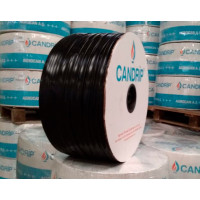
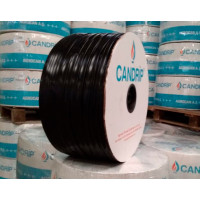
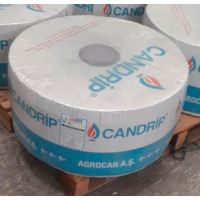
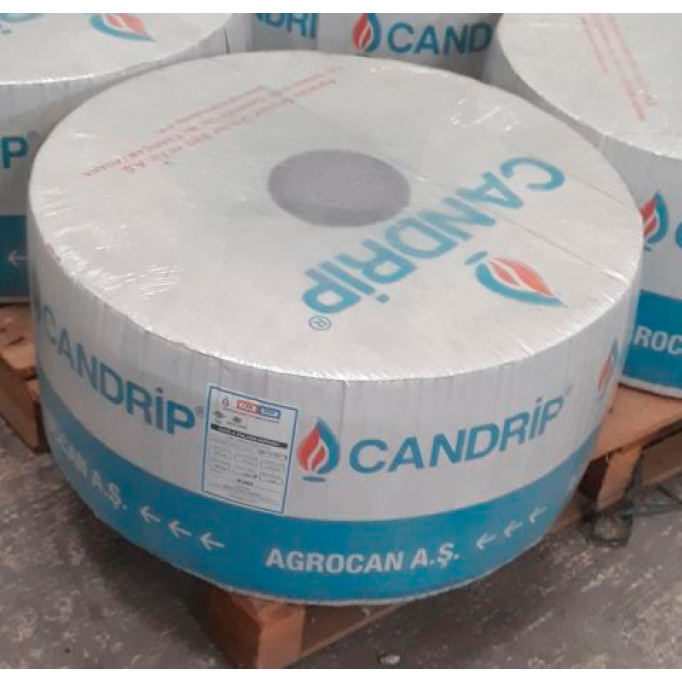
Drip Irrigation Tape CANDRIP 6 mil, 30 cm Emitter Spacing, 1 L/hCANDRIP 6 mil drip tape is a reliable solution for efficient irrigation of vegetables, berries, and field crops in o..
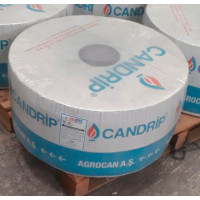
Drip Irrigation Tape CANDRIP 6 mil, 20 cm Emitter Spacing, 1 L/h CANDRIP 6 mil drip tape with 20 cm emitter spacing is engineered for dense plantings where uniform soil moisture a..